¶ Brindisi ACC
¶ Modules
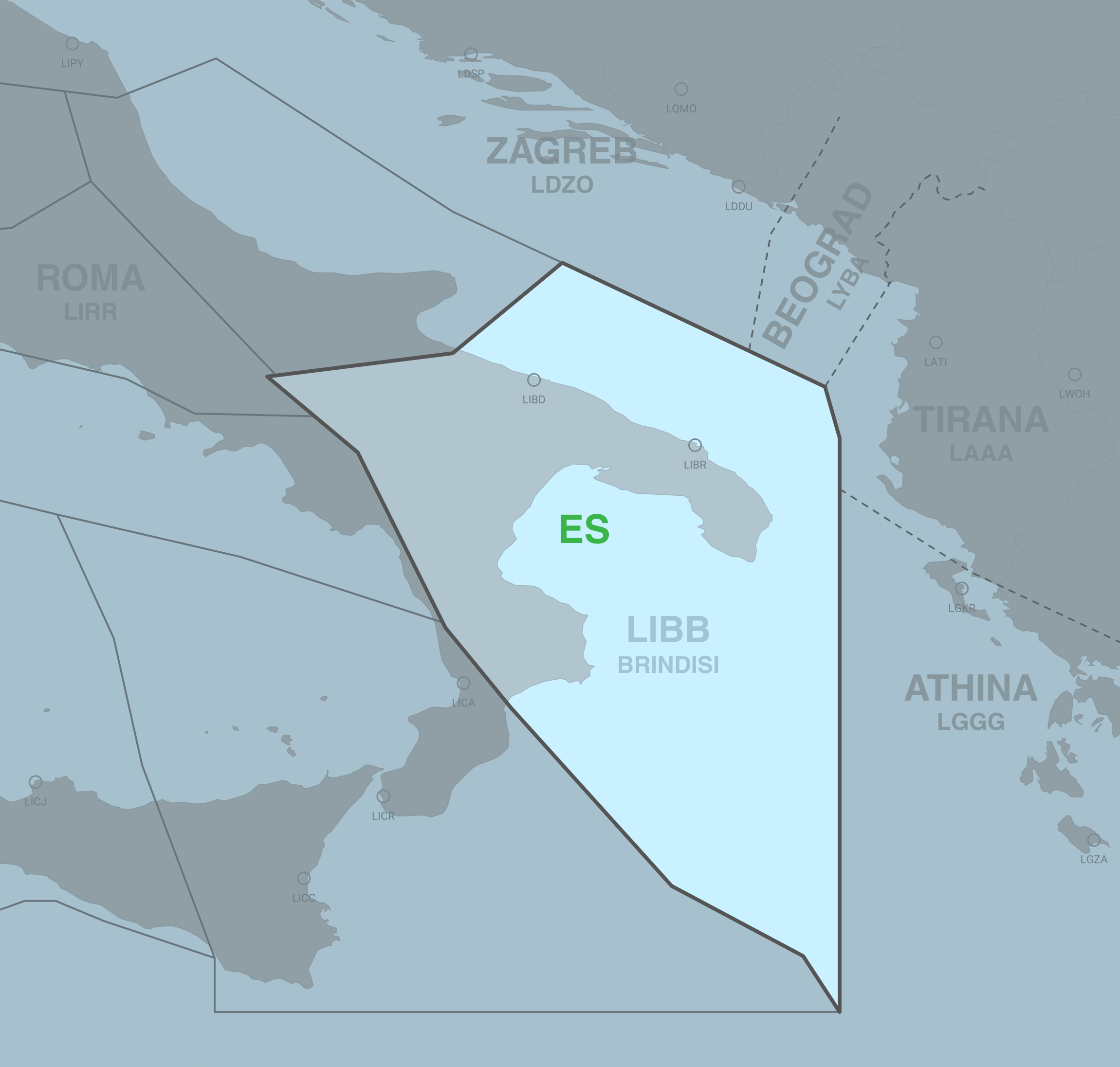
Brindisi ACC is structured as 1 module (ES) + 1 (CS0).
¶ Vertical structure
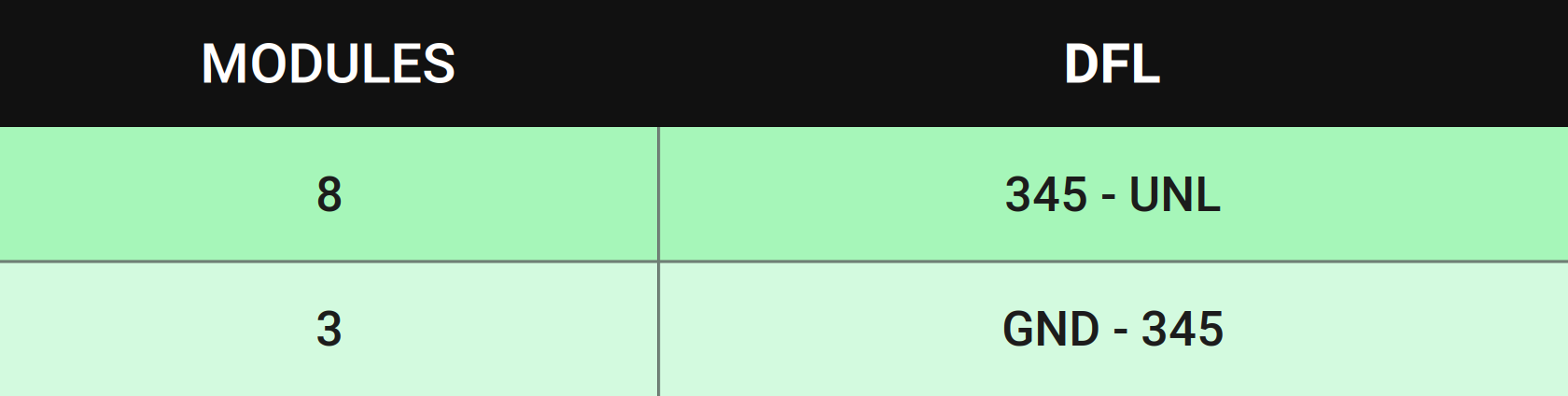
The master sector is LIBB_ES3_CTR. If an additional ATCO comes online, a single vertical split is available according to the following table.
¶ ES SOPs
¶ Standards for transfer of control / Communication between UPPER and LOWER sectors
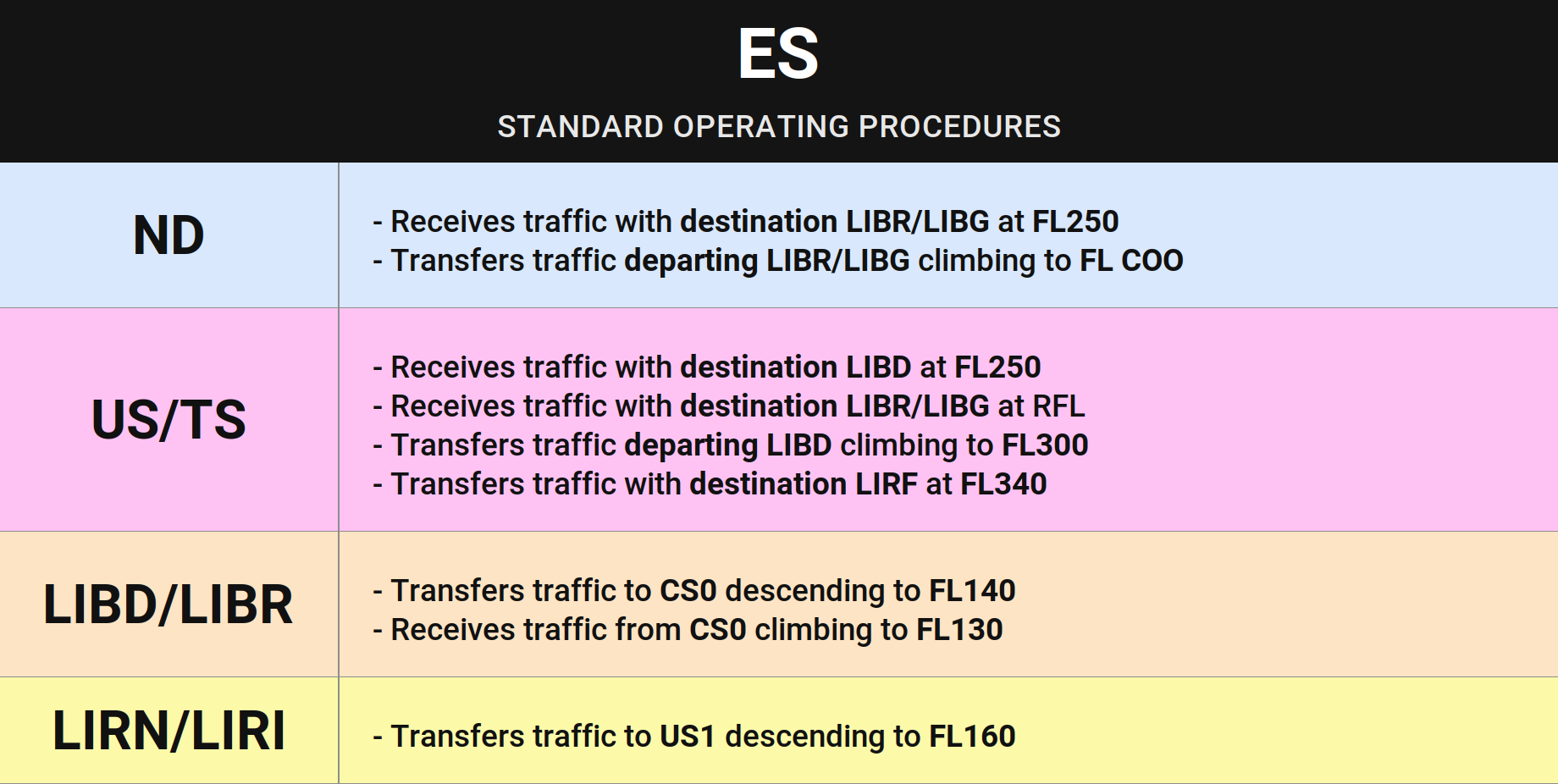
The transfer of control / contact between the LOW - UPPER operating sectors of ACC Brindisi will occur upon activation of the TRF & REL / TRF / ASS functions. If the aircraft is still within the module of the transferring sector, it will be released in accordance with the provisions of the following paragraph.
The operating methods with which the transfer will occur will be the following:
-
Usually in the case of descending flights, the UPPER sector will instruct the aircraft to the lowest level corresponding to the lower vertical limit of its sector before activating the TRF / TRF & REL function;
-
Usually in the case of climbing flights the LOWER sector will instruct the aircraft to the highest level corresponding to the upper vertical limit of its sector before activating the TRF / TRF & REL function.
The transferring ATC, if necessary to resolve conflicts within its sector, may request and coordinate with the accepting ATC a temporary level delegation for the flight subject to the transfer of control.
¶ CS0 SOPs
¶ Area of responsibility
CS0 provides the approach control function for LIBD and LIBR
The vertical limit of the sector is FL135.
¶ Radar separation and spacing
The minimum radar separation to be applied in the CS0 sector is 5 NM.
CS0 shall aim to obtain a spacing of 10 NM on final approach, spacing may be reduced to 5 NM prior coordination with the Tower and in the absence of departures.
¶ Operational recomendations
The preferred IAP for RWY07 is ILS-X RWY07, whereas the preferred IAP for RWY25 is RNP RWY25.
CS0 shall aim to establish aircraft on final using the base-final vectoring technique keeping in mind that the glideslope can be captured at 4000 ft over RUCIC and at 3000ft at 9NM from threshold.
The preferred IAP for RWY31 is ILS RWY31, whereas the preferred IAP for RWY13 is RNP RWY13.
When using ILS RWY31, traffic can be both cleared via the IAF BCS or vectored on a downwind leg and established on final via the base-final vectoring technique.
Opposite RWY operations (RWY13 for arrivals, RWY31 for departures) are frequently used in low traffic situations.
¶ FLAS
¶ Departures
| COP | XFL | TO SECTOR |
|---|---|---|
| EKMUR | FL140 | LIRR-ND1 |
| PISIP | FL140 | LIRR-ND1 |
| All others | FL130 | LIBB-ES3 |
¶ Arrivals
CS0 will receive arriving aircraft already cleared for the RNAV1 STAR. Transfer levels will be in accordance with the following table:
| COP | PEL | FROM SECTOR |
|---|---|---|
| EKMUR | FL110 | LIRR-ND1 |
| PISIP | FL110 | LIRR-ND1 |
| All others | FL140 | LIBB-ES3 |